


By Dada Ayoola | Asiwaju Media Team
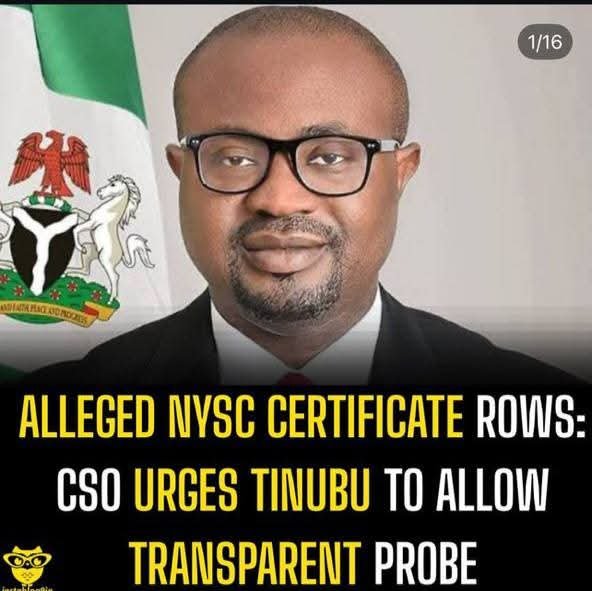
Fresh controversies surrounding the academic and professional credentials of Nigeria’s Minister of Interior, Hon. Olubunmi Tunji-Ojo, have continued to generate intense public debate, with critics describing the situation as an embarrassment to Ondo State and the nation at large.
The allegations, which have gained wide circulation across traditional and social media, border on claims of forged academic and service documents, including WAEC, bachelor’s degree, NYSC discharge certificate, and a master’s degree purportedly attributed to the minister. Critics argue that the minister’s prolonged public silence has further fueled suspicion and public distrust, with some interpreting it as an implicit admission of wrongdoing, an interpretation his supporters dispute.
According to those raising the allegations, documents linked to the minister and circulated publicly contain multiple inconsistencies. They point to a WAEC result allegedly dated 1999 but bearing features such as an adult passport photograph which, they argue, were not standard practice for WAEC results at the time.
Further questions have also been raised about the NYSC certificate associated with the minister, with critics citing provisions of the NYSC Act which prohibit full time national service while holding elective political office. They allege that Tunji-Ojo’s NYSC service was claimed to have taken place while he was serving as an elected member of the House of Representatives in 2019, and that the duration allegedly spanned several years rather than the statutory one year.
These claims, though yet to be judicially determined, have heightened public anxiety, particularly given Tunji-Ojo’s role as Minister of Interior, a position that oversees sensitive national matters including internal security, immigration, and the National Identification Number (NIN) database. Many citizens have expressed fears over the safety and integrity of their personal data, especially as NINs are increasingly linked to banking systems and tax reforms.
Civil voices and concerned groups are therefore calling on President Asiwaju Bola Ahmed Tinubu to order an independent security and credential review of the minister, insisting that public confidence must be restored before entrusting such sensitive responsibilities to any official under serious scrutiny.
Within the ruling All Progressives Congress (APC), some stakeholders have publicly distanced themselves from the controversy. Party figures insist that the matter should be treated as a personal issue and have urged the minister to address the allegations directly in order to protect the image of the party. One stakeholder, speaking anonymously, alleged that some individuals defending the minister on social media were financially induced and have no verifiable affiliation with the APC, adding that if the credentials were genuine and traceable, a clear and factual defense would have settled the matter by now.
As the controversy deepens, analysts warn that the credibility of public institutions and trust in government reforms, particularly those involving citizens’ data and national security may continue to erode unless the allegations are transparently addressed through appropriate legal and administrative channels.
For now, Nigerians await a decisive response, either from the minister himself or from the appropriate authorities, to clarify the issues and reassure the public that accountability remains a cornerstone of governance.
