








By Ilesanmi Durojaiye | Asiwaju Media Team
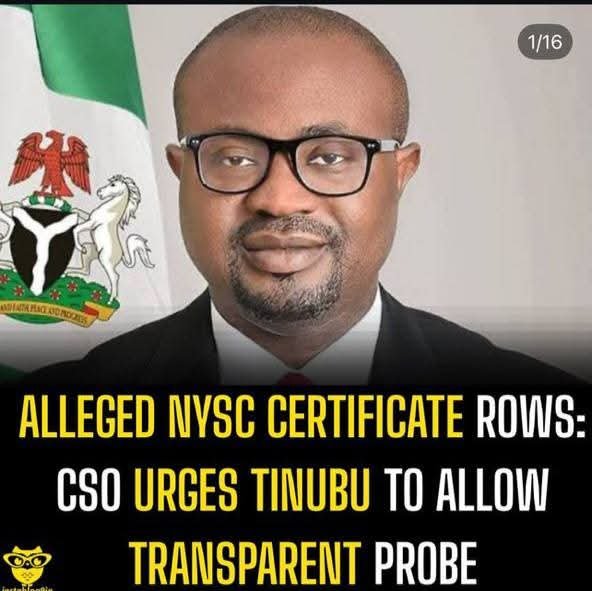
Public debate surrounding Nigeria’s Minister of Interior, Hon. Olubunmi Tunji-Ojo, has intensified amid sustained allegations relating to contract administration, academic qualifications, and National Youth Service Corps (NYSC) records.
While no court of competent jurisdiction has made any adverse finding against the minister, stakeholders argue that the issues raised have assumed national significance, touching on transparency, accountability, and public confidence in governance.
Observers note that the controversies, which have continued to circulate in the public domain, now extend beyond partisan considerations. Civil society organisations, legal professionals, and concerned citizens maintain that the matter raises constitutional questions regarding public accountability and the duty of public office holders to respond to issues of legitimate public interest.
Reacting to claims that individuals are allegedly being paid to counter narratives surrounding the NYSC related allegations, senior legal practitioner, Barrister Usani, SAN, cautioned that such reports, though unverified, underscore the need for clarity and openness. He argued that the absence of a direct, comprehensive, and personal response from the minister has contributed to public unease.
According to him, any proven attempt to influence public opinion through inducement would, in established democracies, attract serious scrutiny, particularly when attributed to a public official entrusted with internal security responsibilities.
Barrister Usani further expressed concern over what he described as the perceived slow response of anti-corruption agencies, notably the Economic and Financial Crimes Commission (EFCC) and the Independent Corrupt Practices and Other Related Offences Commission (ICPC). He contrasted the present situation with past cases involving senior public officials, where investigations were pursued with visible urgency, noting that inconsistency in enforcement often erodes public trust.
Reactions within the ruling All Progressives Congress (APC) have been varied. Engr. Benson Atere, an APC chieftain, stated that the party considers the matter one of governance and institutional credibility rather than partisan politics.
Another party stakeholder, Alhaji Gamba Gololo, raised concerns about what he termed selective application of accountability mechanisms, alleging without official confirmation, that the minister did not honour an EFCC invitation relating to contract issues. He argued that perceived disparities in how similar allegations were handled in the past and present continue to fuel public suspicion.
Beyond contract related concerns, attention has also focused on the minister’s academic background and NYSC records. For the 2019 House of Representatives election, publicly available documents indicate that Tunji-Ojo declared possession of a first degree from Obafemi Awolowo University (OAU), without specifying the year of graduation, while also stating that he proceeded to North London University. He also declared a master’s degree from London Metropolitan University, reportedly obtained in 2006.
During his ministerial screening in 2023, Tunji-Ojo presented an NYSC discharge certificate dated February 2023. The NYSC subsequently confirmed the certificate as authentic, explaining that he was initially mobilised in 2006, allegedly absconded, later remobilised in 2019, and eventually issued a discharge certificate following administrative processes.
Notwithstanding this official clarification, critics continue to raise questions about how NYSC service obligations were fulfilled during periods when the minister was reportedly studying abroad in 2006 and later serving as an elected member of the House of Representatives in 2019.
Although these issues remain undetermined by any court, they persist as subjects of public discourse.
Groups such as the League for Good Governance, Integrity Group, and the Asiwaju Media Team have called on President Asiwaju Bola Ahmed Tinubu to allow independent and transparent scrutiny of all relevant records to conclusively address the concerns.
They argue that such an approach would be consistent with the spirit of the Constitution of the Federal Republic of Nigeria, which guarantees the right to information, fair hearing, and accountability in public office.
Legal analysts emphasize that Section 36(5) of the Constitution guarantees the presumption of innocence for every person accused of wrongdoing. At the same time, they note that democratic norms and constitutional principles of accountability require public officials to subject themselves to transparent processes when serious allegations arise, in order to safeguard institutional integrity and public confidence.
They reference past instances where public officers stepped aside or submitted themselves to investigation over credential related controversies, not as an admission of guilt, but as a means of preserving trust in public institutions.
As the debate continues, stakeholders maintain that only a transparent, constitutionally grounded process, guided by the rule of law and due process can definitively resolve the questions and restore public confidence.


