


By Ahmed Musa | Asiwaju Media Team
Abuja, Nigeria — A scheduled meeting between the Office of the Attorney General of the Federation (AGF) and a team of lawyers representing the Director General of the Asiwaju Media Team, Prince Emorioloye Owolemi, ended inconclusively on Wednesday following the absence of the Director in charge of the Freedom of Information (FOI) unit.
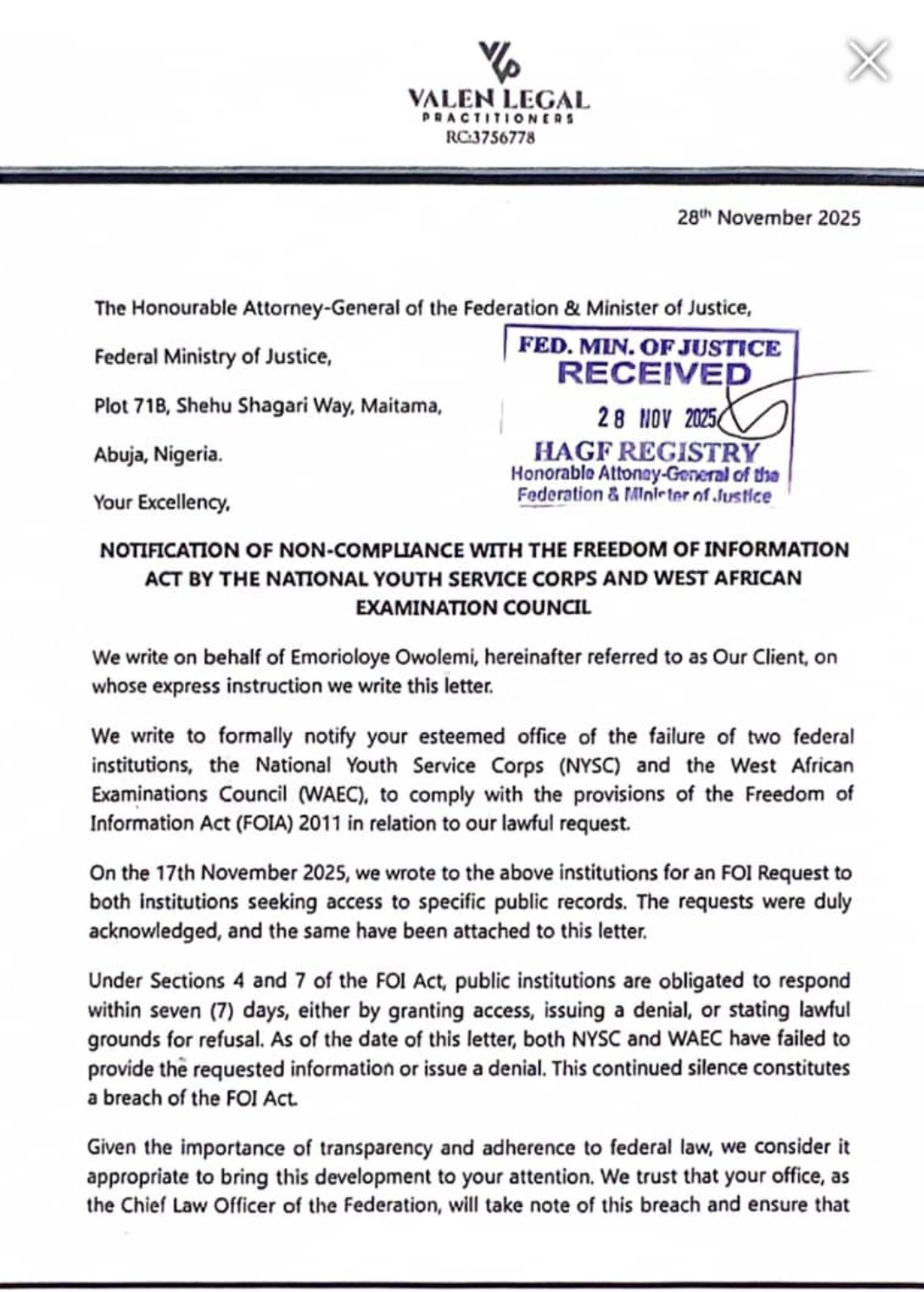
The meeting, convened by the Attorney General of the Federation, followed a formal petition submitted by the legal team alleging violations of the Freedom of Information Act by two federal institutions; the National Youth Service Corps (NYSC) and the West African Examinations Council (WAEC). According to the petition, both institutions failed to comply with FOI requests seeking records relating to the Minister of Interior, Olubunmi Tunji-Ojo, despite the statutory seven day window mandated by law.
The letter, dated November 28, was acknowledged by the Office of the Attorney General. In response, the AGF’s office invited the legal representatives for a feedback and possible resolution meeting scheduled for December 18. The meeting was initially fixed for 12:00 p.m. but was later rescheduled to 3:00 p.m.
However, at the rescheduled time, the meeting could not proceed as planned due to the reported absence of the Director of FOI, whose presence was considered critical to the discussions. Consequently, the meeting was adjourned and rescheduled for 9:00 a.m. on Thursday, December 19, at the Attorney General’s office.
Meanwhile, the senior counsel representing Prince Owolemi has been instructed to proceed with court action to compel compliance by the concerned institutions. It remains uncertain whether the Attorney General’s office will be able to facilitate the release and publication of the requested records from NYSC and WAEC without judicial intervention.
The continued silence of the NYSC, particularly regarding the release of the mobilization records of Olubunmi Tunji-Ojo, has sustained intense public debate. Observers note that the matter has now largely shifted into the legal arena, with indications that only a court order may compel the institutions to disclose the records, amid claims of internal or external constraints allegedly preventing voluntary compliance.
Further developments are expected following the rescheduled meeting at the Office of the Attorney General.
