


By Prince Emorioloye Owolemi |
Director General, Asiwaju Media Team
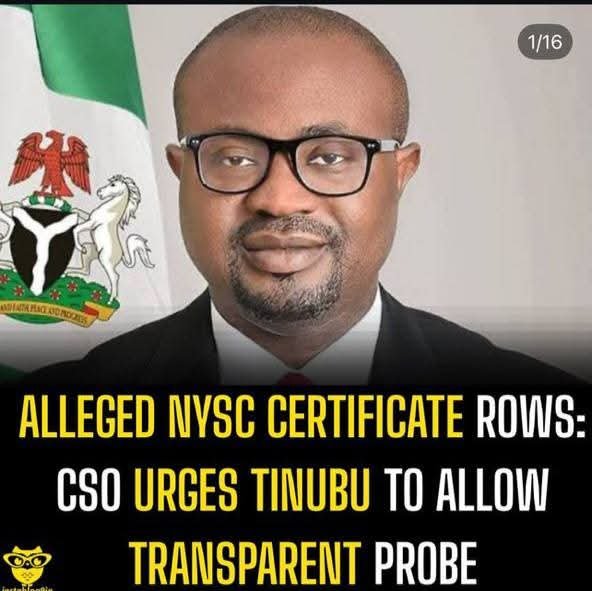
Allegations surrounding the academic and professional credentials of Nigeria’s Minister of Interior, Hon. Olubunmi Tunji-Ojo, have continued to attract widespread public attention, intensifying debates across both traditional and digital media platforms. Critics describe the unfolding controversy as damaging not only to the image of Ondo State but also to Nigeria’s institutional credibility.
The claims, now firmly in the public domain, revolve around alleged irregularities in documents attributed to the minister, including his WAEC certificate, university degree, National Youth Service Corps (NYSC) discharge certificate, and a purported master’s degree. While supporters of the minister have dismissed the documents in circulation as forgery, critics argue that his sustained public silence has only deepened public suspicion and mistrust.
Those raising the concerns point to what they describe as noticeable inconsistencies in documents circulated online. Particular attention has been drawn to a WAEC attestation result allegedly dated 1999, which reportedly carries features such as the inclusion of an adult passport photograph that critics insist were not part of WAEC documentation practices at the time.
Further scrutiny has been directed at the NYSC certificate linked to the minister. Critics cite provisions of the NYSC Act, which prohibit full time national service by individuals holding elective political office. They allege that the minister’s claimed NYSC service coincided with his tenure as an elected member of the House of Representatives in 2019, and that the service duration allegedly exceeded the statutory one year requirement.
Although these allegations have not yet been subjected to judicial determination, they have generated significant public concern, particularly in view of the sensitive nature of the Interior Ministry’s responsibilities. The ministry oversees critical national institutions such as immigration services, internal security frameworks, and the National Identification Number (NIN) database. In this context, many Nigerians have expressed unease about the security and integrity of citizens’ personal data, especially as NINs are increasingly integrated into banking systems, taxation, and broader governance reforms.
Against this backdrop, civil society voices and concerned stakeholders are calling on President Asiwaju Bola Ahmed Tinubu to authorize an independent and transparent review of the allegations. They argue that restoring public confidence requires decisive action and clarity, particularly when questions are raised about officials entrusted with sensitive national duties.
Within the All Progressives Congress (APC), reactions have been mixed. While some party stakeholders have distanced the party from the controversy, emphasizing that it remains a personal matter, others have urged the minister to address the allegations openly in order to safeguard the party’s public image. An APC stakeholder, who spoke on condition of anonymity, alleged that some online defenders of the minister lack verifiable party affiliation and may be acting out of inducement, adding that a clear, factual response supported by verifiable records would have resolved the matter if the credentials were beyond dispute.
As public discourse continues, analysts warn that prolonged ambiguity could further erode trust in public institutions and undermine confidence in government reforms, particularly those tied to national security and citizens’ data management.
Ultimately, Nigerians continue to await a clear and authoritative response either from the minister himself or from the appropriate state institutions to resolve the issues and reaffirm that transparency and accountability remain fundamental pillars of democratic governance
